 Industry InsightsHow to Set Diameter and Weld Quality on a Ring Making & Butt-Welding Combo MachineAn integrated ring-making and resistance butt-we…


TIG vs Spot (Butt) Welding for Metal Wire: Key Differences
Industry Insights
Author:
leaf
Time:
5 月 25, 2023
Argon TIG welding and spot (pressure/butt) welding are two common methods for joining metal wire. They differ mainly in welding process, filler materials and weld results.
First, argon TIG welding heats the metal with an electric arc until it melts, while a shielding gas protects the weld pool. Argon is the most common shield gas and keeps oxygen and nitrogen in the air from contaminating the pool. TIG produces high-quality welds suited to precision metal joining.
Spot (pressure) welding brings the metals into direct contact under force so they melt and form a joint. Shielding gas is usually unnecessary because pressure keeps oxygen and nitrogen out of the weld. The process is fast and fits high-volume or simpler welding tasks.
Second, filler practice differs. TIG typically uses welding wire or rods that melt gradually into the seam. Spot welding usually relies on the contact points or electrodes themselves; heat and pressure melt the joint rapidly without continuous filler feed.
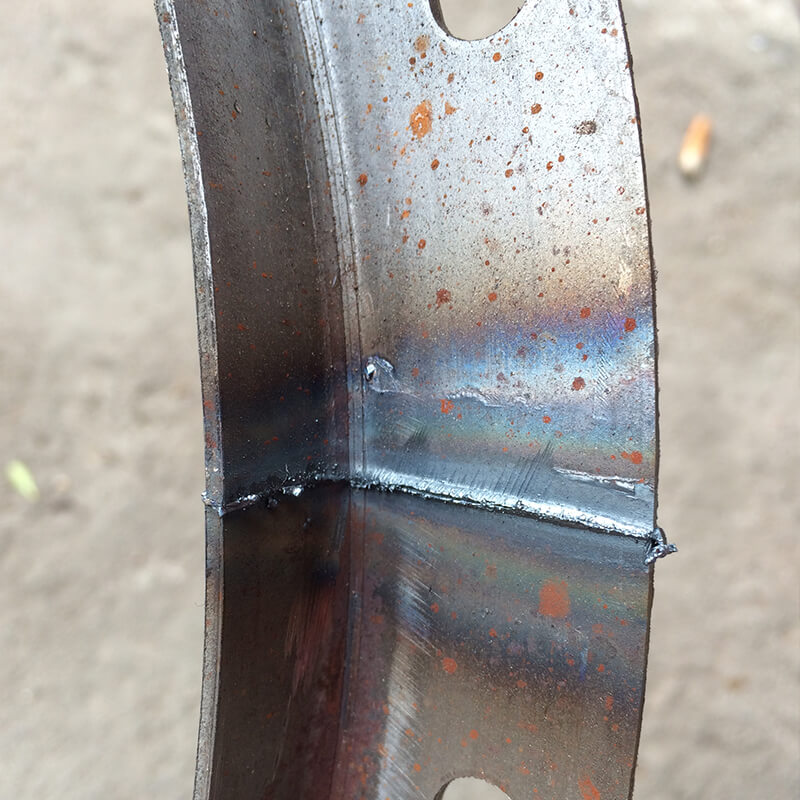
Finally, weld appearance and strength differ. TIG yields strong, neat seams for high-precision work. Spot welds are generally lower in strength and less refined in appearance, but they finish quickly and suit mass production and simple joints.
In summary, choose between argon TIG and spot welding based on process needs, materials and required weld quality for the specific job.
Related articles
View allIndustry InsightsHow to Set Diameter and Weld Quality on a Ring Making & Butt-Welding Combo MachineAn integrated ring-making and resistance butt-we…Industry InsightsHow to Straighten Wire Fast on a CNC Wire Bender: Shop-Proven Setup That Saves ScrapCNC wire benders deliver high accuracy and speed…Industry InsightsHow to Learn a 3D Wire Forming Machine: Beginner Path from Hardware to Solo ProgrammingA 3D wire forming machine (also called a 3D wire…Related news


Foshan Zhaoshi designs and builds CNC wire forming and resistance-welding equipment — from ring makers and 2D/3D benders to flange lines and turnkey cells. 5000㎡ Shunde workshop · 20+ years · engineer-led support.
Mobile/WhatsApp
Address
No. 5, Xiashi Section, Yangda Road, Xiashi Village, Lunjiao Sub-district, Shunde District, Foshan City, Guangdong Province, China
Mon–Sat 08:00–18:00 (GMT+8)
Follow Us
Copyright © 2026 Foshan Zhaoshi Precision Electromechanical Co., Ltd. All rights reserved.
business license