 Industry InsightsHow to Set Diameter and Weld Quality on a Ring Making & Butt-Welding Combo MachineAn integrated ring-making and resistance butt-we…

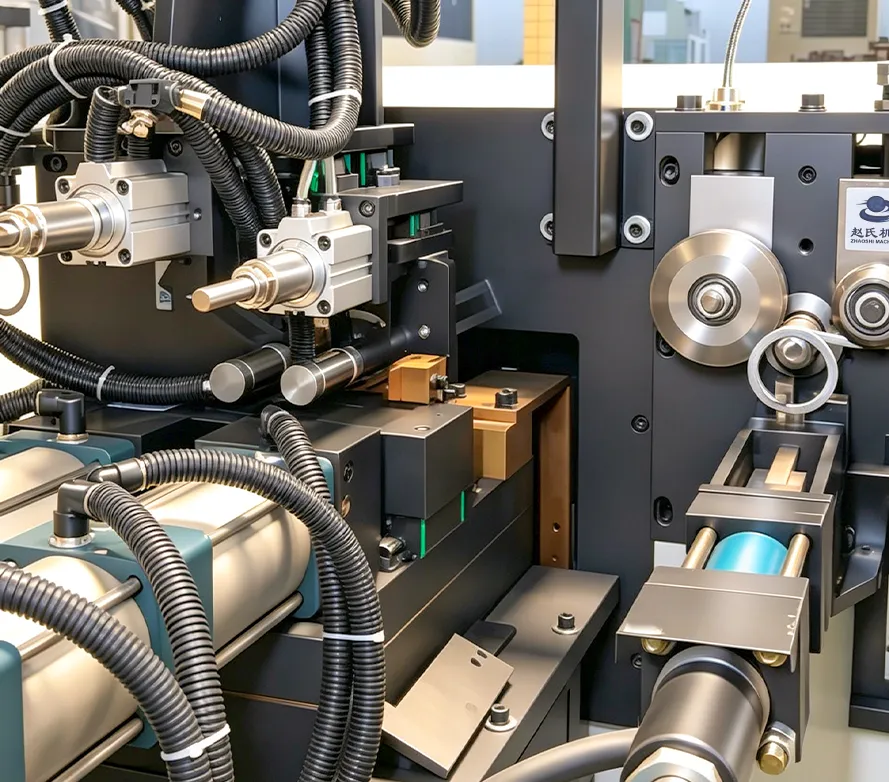
How 3D Wire Forming Machines Work — and How They Differ from 2D Benders
Industry Insights
Author:
leaf
Time:
5 月 20, 2023
A 3D wire forming machine (also called a 3D wire bender) is equipment dedicated to processing metal wire. Driven by CNC technology and servo motors, it forms wire into parts of many shapes. Compared with traditional 2D wire benders, 3D wire formers deliver higher machining accuracy and a wider range of applications.
In operation, metal wire is fed into the machine while the CNC system controls feeding and bending forces so the wire is shaped to the programmed geometry and dimensions. Forming accuracy is typically within 0.30 mm, with the added benefits of fast cycle times and straightforward operation.
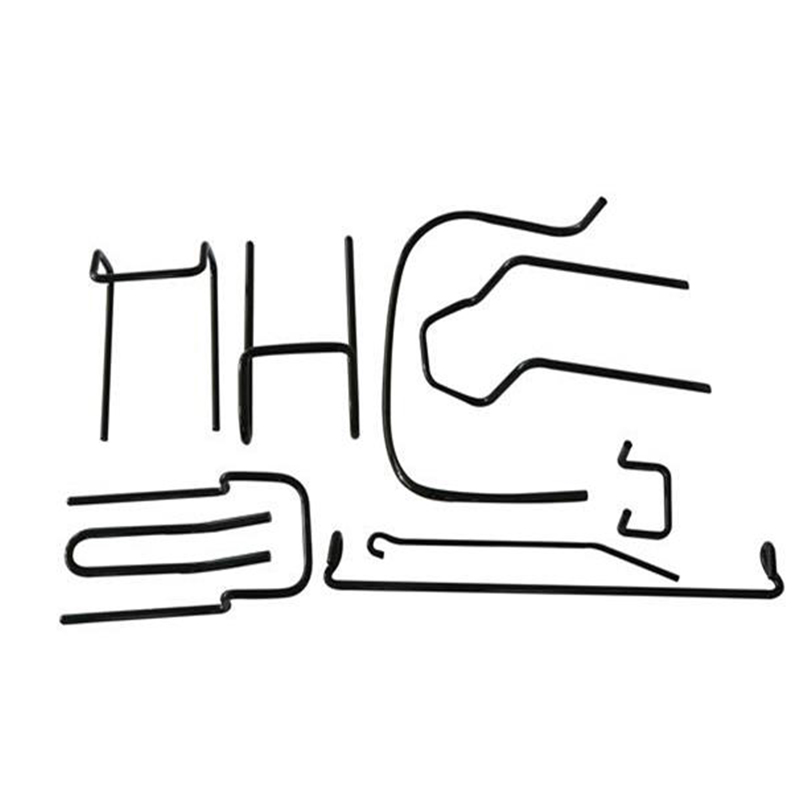
The biggest difference versus a 2D wire bender is dimensionality. A 2D bender can only form planar wire parts, while a 3D wire former can produce three-dimensional products—curves, arcs, rings and other spatial shapes. That makes 3D formers more widely used in component machining, tooling and decorative metalwork.
Application areas are broad: automotive parts, mechanical components, building elements, electronic parts and many other metal products. In automotive manufacturing, 3D wire formers make body frames and chassis parts; in general machinery they produce frames, special-shaped racks, lighting fixtures, shopping carts and similar goods.
In short, a 3D wire forming machine is a high-precision, high-efficiency metalworking system with strong application potential. Its price is typically higher than that of a 2D planar wire bender.
Related articles
View allIndustry InsightsHow to Set Diameter and Weld Quality on a Ring Making & Butt-Welding Combo MachineAn integrated ring-making and resistance butt-we…Industry InsightsHow to Straighten Wire Fast on a CNC Wire Bender: Shop-Proven Setup That Saves ScrapCNC wire benders deliver high accuracy and speed…Industry InsightsHow to Learn a 3D Wire Forming Machine: Beginner Path from Hardware to Solo ProgrammingA 3D wire forming machine (also called a 3D wire…Related news

Foshan Zhaoshi designs and builds CNC wire forming and resistance-welding equipment — from ring makers and 2D/3D benders to flange lines and turnkey cells. 5000㎡ Shunde workshop · 20+ years · engineer-led support.
Mobile/WhatsApp
Address
No. 5, Xiashi Section, Yangda Road, Xiashi Village, Lunjiao Sub-district, Shunde District, Foshan City, Guangdong Province, China
Mon–Sat 08:00–18:00 (GMT+8)
Follow Us
Copyright © 2026 Foshan Zhaoshi Precision Electromechanical Co., Ltd. All rights reserved.
business license